

Since 2010
The software healthcare facilities have run on for sixteen years
Patient referrals, care records, team scheduling, recruitment, billing, mobile apps: a complete business system, sixteen years of rules, thirty sites — and an interface being rebuilt screen by screen without ever stopping the work.
of continuous development and operation, by the same team
healthcare facilities using it every day
applications making up the system: admissions, scheduling, portals, mobile, coding
applications received and pre-sorted, across 706 job postings
The context
Gextra runs healthcare facilities day to day: admissions, pre-admissions, care records, staff scheduling, billing, exchanges with patient referral platforms. It is not a tool you open on Monday morning; it is the one that stops the facility functioning when it goes down. It was written sixteen years ago, and its interface technology aged faster than its business rules — which are still correct, and often written down nowhere but in the code.
The workflow, in motion
Everything a care home pushes through it
Not one more piece of software: the one that holds patient referrals, recruitment, care, payroll and billing together — on the same day, across thirty sites.
What comes in
- alt_routePatient referralsHospital requests arrive from the public referral portal, collected automatically.
- handshakeReferrers and contacts36,828 contacts: doctors, social workers, families, with their exchanges and documents.
- descriptionApplications59,247 CVs received across 706 job postings, submitted on each facility's public application page.
- assignmentOnline pre-admissionThe file filled in by the patient or a relative from home, with no account to create.
- contact_pageRequests from the public siteThe contact form on the group's website — run by another agency — writes straight into gextra: nobody re-keys a lead.
home_healthThe file, at the centre
Residents, stays, rooms, care, team scheduling, time tracking, contracts, stock, documents, invoices — one database, one set of business rules.
7 122
residents in house today
2 195
staff in post
30
care homes
What goes out
- medical_servicesCare softwareStaff and resident dependency levels pushed to the care tool, with no double entry.
- badgeEmployment agencyThe employer certificate filled in by a robot on the portal, 99,838 fields, straight from the employee record.
- drawSignature and postContracts signed electronically, postal mail sent without going near a printer.
- paymentsBilling and payroll99,838 invoices issued, payroll items taken from the real schedule rather than re-keyed.
- publicThe group's public siteSites and job openings pushed by API, booking calendar and activities agenda embedded as iframes.
swap_horizAnd while all this runs, the interface is rebuilt screen by screen behind the same address: both versions live side by side, rolling back stays possible, and nobody loses a day's work.
What it weighs in code: 137 business screens, 194 tables, 13 applications around it. But none of these flows is a separate project — they all write into the same file, which is why an address changed at the front desk shows up on the invoice.
What we did
- check_circleContinuous development of the business software since 2010: admissions, records, scheduling, billing, portals for families and doctors.
- check_circleScreen-by-screen migration to a modern interface, with both versions living behind the same address. The old version is the reference: it serves as the oracle, oddities included, which are almost always a forgotten business rule.
- check_circleIntegrations across the healthcare ecosystem: patient referral platforms, care software, exchanges with public bodies. Every feed logged, every interruption alerted.
- check_circleMobile applications published on both stores, with tracking of the deadlines Apple and Google impose every year.
- check_circleHosting, backups and monitoring, with the requirements specific to health data — the most demanding regime there is.
- check_circleRegular access audits on API endpoints: what must be authenticated is, and the accepted exceptions are written down and dated rather than discovered by accident.
- check_circleRecruitment end to end: writing and publishing openings, receiving applications, automatic CV pre-sorting, then the staff record — contracts, qualifications, absences, scheduling and payroll in one continuum.
- check_circleBusiness development: referrers, doctors and social workers tracked like a client base, with the admission requests they send, the follow-ups, and dashboards per site.
What changed
- trending_upSixteen years of continuity, with no takeover by a supplier who would have had to relearn everything. The business rules were never lost.
- trending_upThe migration advances without ever interrupting the work: teams move over screen by screen, and rollback stays possible at every step.
- trending_upKnown compliance gaps are written in a dated register, with their deadline. A documented gap is defensible; a forgotten one is not.
- trending_upThe facility has one point of contact for the software, the servers, the mobile apps and the integrations. Nobody passes the blame on an outage day.
The services involved
This engagement drew on the following expertise. Each has its own page, with its method and its deliverables.
Other case studies
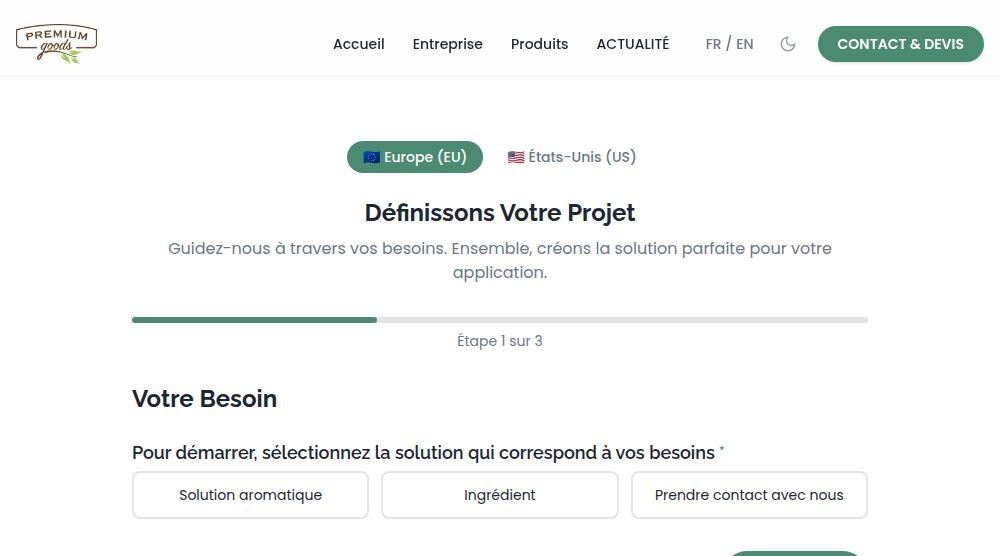
Premium Goods — site public
Since 2018Vanilla, flavours, tobacco: the same product is not named the same way in Europe and in the United States. The public site handles that, from the copy through to the form.
Read the case studyarrow_forward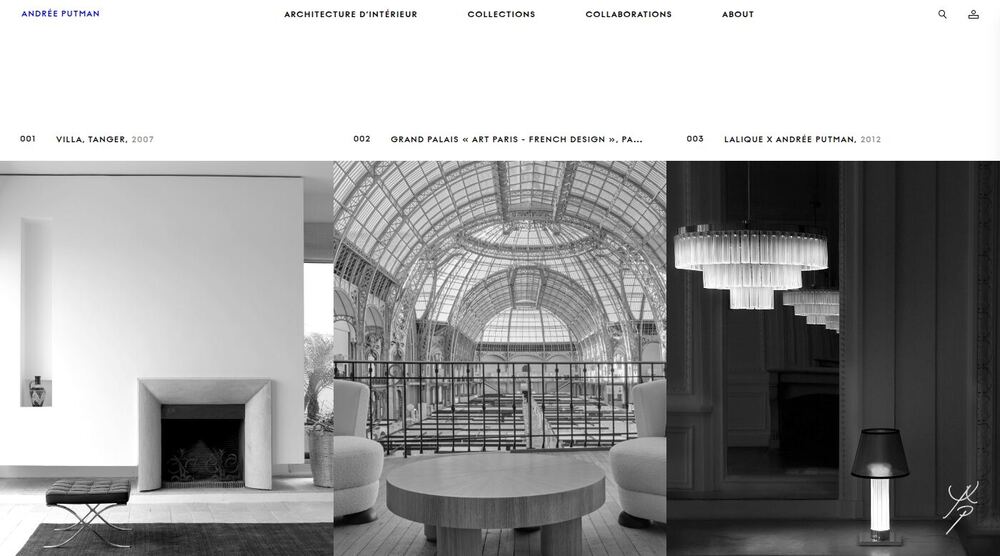
Andrée Putman
Since 2025Reissued furniture, interior architecture projects, collaborations: a bilingual site that shows a body of work and sells pieces, without keeping visitors waiting.
Read the case studyarrow_forward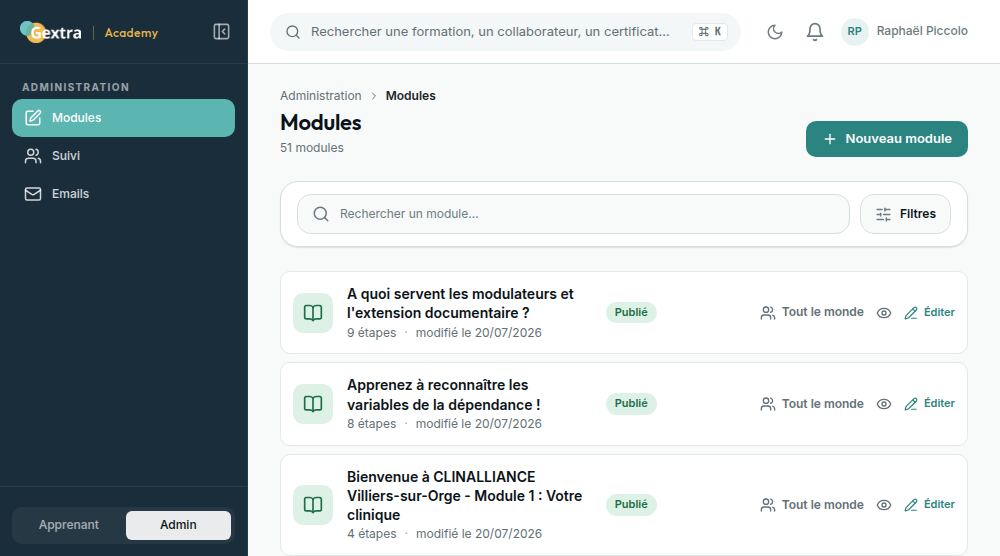
Gextra Academy
Since 2026The vendor was cutting off access: courses, materials and assessments would have left with the subscription. Everything was recovered, then put back in service on a platform the organisation owns.
Read the case studyarrow_forwardLet's talk about your project
Thirty minutes is enough to tell whether we are the right fit. We reply within 48 hours, and we say no when it is not for us.