

Since 2015
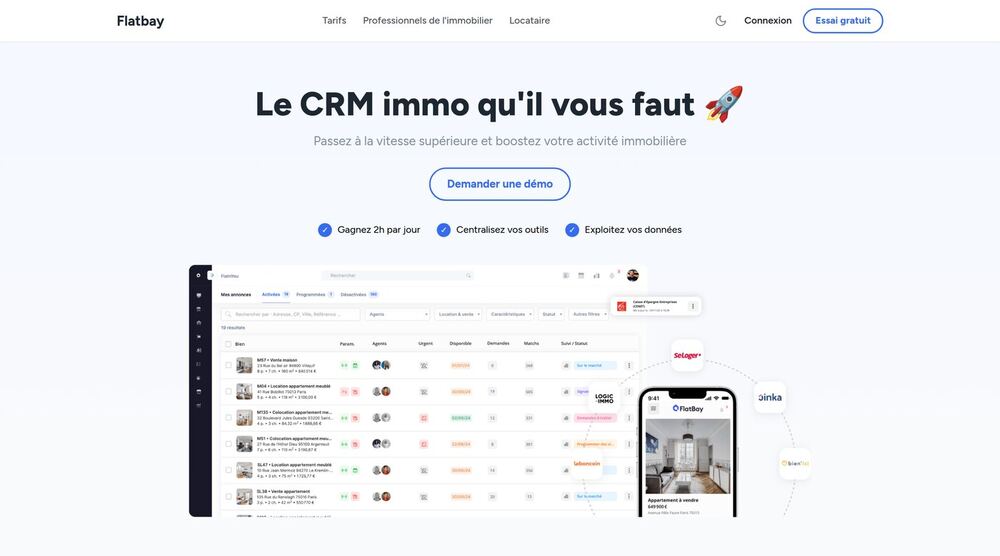
A property platform that screens rental applications on its own
Agencies drowning in incomplete files. An assistant that chases missing documents, computes the affordability ratio, and only passes on complete applications.
rental applications processed through the assistant
automated follow-ups sent for missing documents
complete files passed to the agent, with no back and forth
The context
An agency publishing a listing receives dozens of applications, most of them incomplete: a payslip missing, a tax notice, the guarantor. Each file then needs a round trip by email, and time spent chasing documents is time not spent letting property. FlatBay is the platform several agencies run their business on: listing distribution, applications, file tracking, and all the back office that goes with it.
The workflow, in motion
Applications sorted before they reach the agent's desk
The assistant collects the documents, chases whatever is missing, works out the rent-to-income ratio and applies the agency's own criteria. The agent only ever sees complete, compliant files.
- Proof of identity
- Last three payslips
- Proof of address
- Tax assessment
Reminder sent automatically, then on day 3, 6 and 10 — the gap widens each time, and nobody has to think about it.
Rent-to-income ratio
780 € / 2 500 € — rent including charges against household income
agency threshold 33 %
Incomplete file
Automatic reminders for as long as a document is missing, with no agency time spent.
Outside the criteria
Automatic rejection, with the exact reason sent to the applicant rather than silence.
Compliant file
Passed to the letting agent, documents checked and ratio already calculated.
No AI here: these are the agency's own criteria — ratio thresholds, guarantors, accepted situations — applied to the letter, on every file, at any hour.
What we did
- An application assistant that ticks off documents received, identifies what is missing, and chases the applicant on a schedule — day one, day three, day six, day ten — until complete or abandoned.
- Automatic calculation of the affordability ratio against each agency's own threshold, which differs between them: the file is passed on, declined with a reason, or chased.
- Imports from industry portals and software, with an exchange log and resumption after interruption — a feed that stops raises an alert instead of going quiet.
- Multi-agency support: each agency has its own domain, branding and settings, on a single application. The wall between two agencies' data is verified by automated tests.
- Hosting, deployments and monitoring, including the overnight jobs — imports, follow-ups, sends — whose failure raises no visible error.
- Email deliverability: domain authentication, separated sending, and a screen showing the exact content each recipient received.
What changed
- Agents only see complete files. The document-chasing work, which took hours a week per agency, no longer reaches them.
- Applicants know where they stand without phoning: they get the list of what is missing, and a reminder if they forget.
- The workflow is deterministic and traceable end to end. It is not an opaque decision: every rejection carries its reason, and the threshold applied is the one the agency set.
- The platform has been running for ten years and keeps evolving, with the same people who built it.
The services involved
This engagement drew on the following expertise. Each has its own page, with its method and its deliverables.
Other case studies
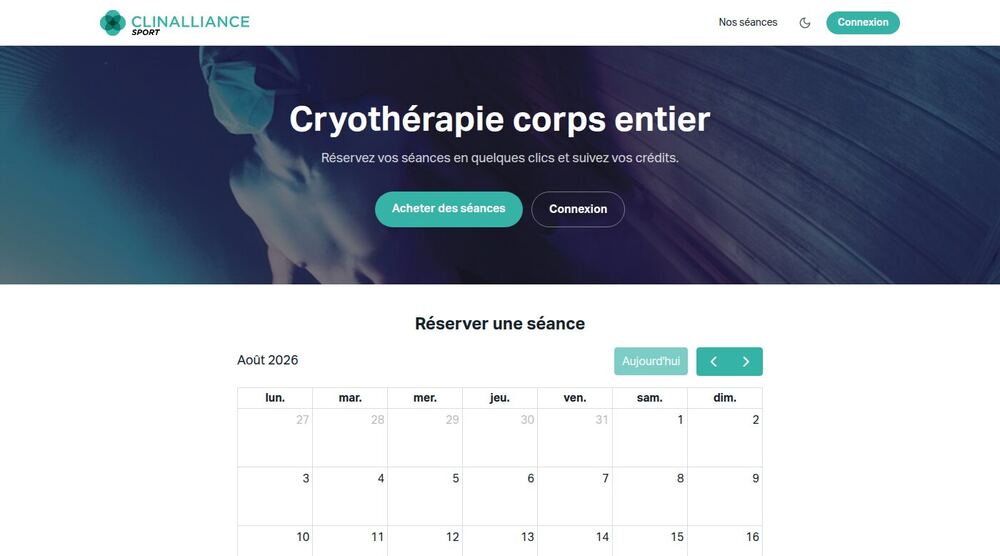
Clinalliance — réservation
Since 2016A centre opens its slots, clients book, pay and get their invoice. The service has been running since 2016 and has followed every version of our stack.
Read the case study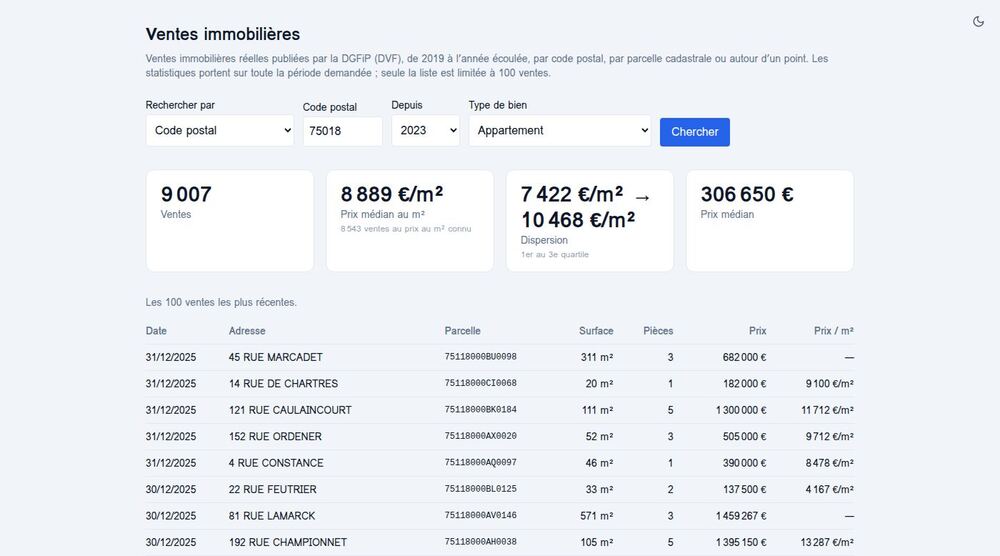
Référentiels de données
Since 2024Addresses, public transport, property sales, land registry: four services answering the same questions as paid APIs, built from open public data, running on our servers.
Read the case study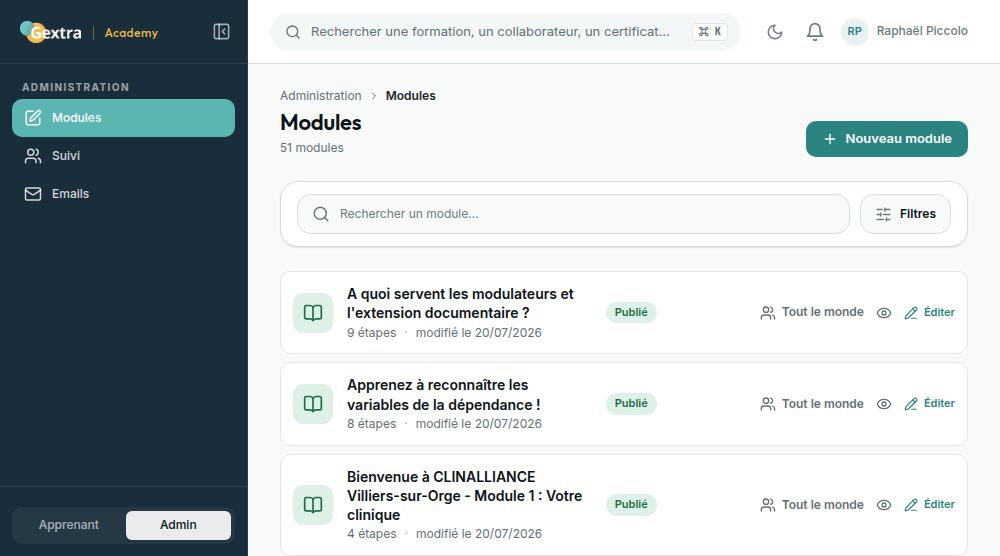
Gextra Academy
Since 2026The vendor was cutting off access: courses, materials and assessments would have left with the subscription. Everything was recovered, then put back in service on a platform the organisation owns.
Read the case studyLet's talk about your project
Thirty minutes is enough to tell whether we are the right fit. We reply within 48 hours, and we say no when it is not for us.